
Guide, updated 2026-09-17
What hard water does to a Las Vegas water heater
Scale, sediment, that rumbling sound, and why valley water heaters rarely reach the number on the warranty. What maintenance actually helps. Sources linked.
- Sources linked at the foot of the page
- Written for Las Vegas and Clark County
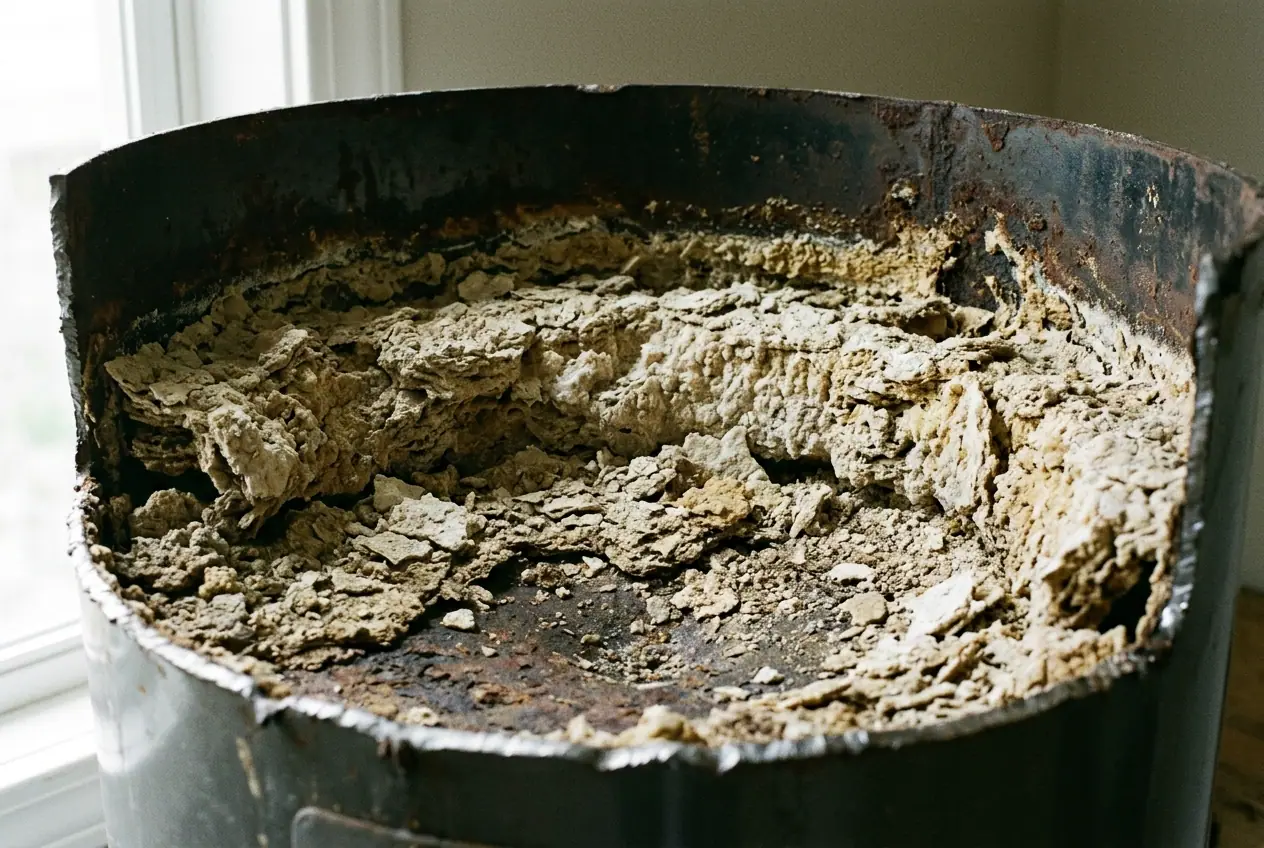
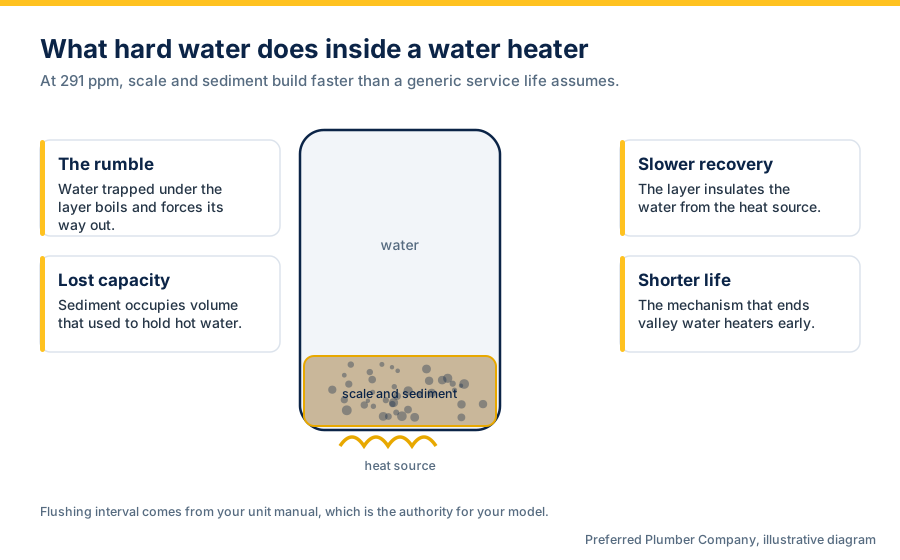
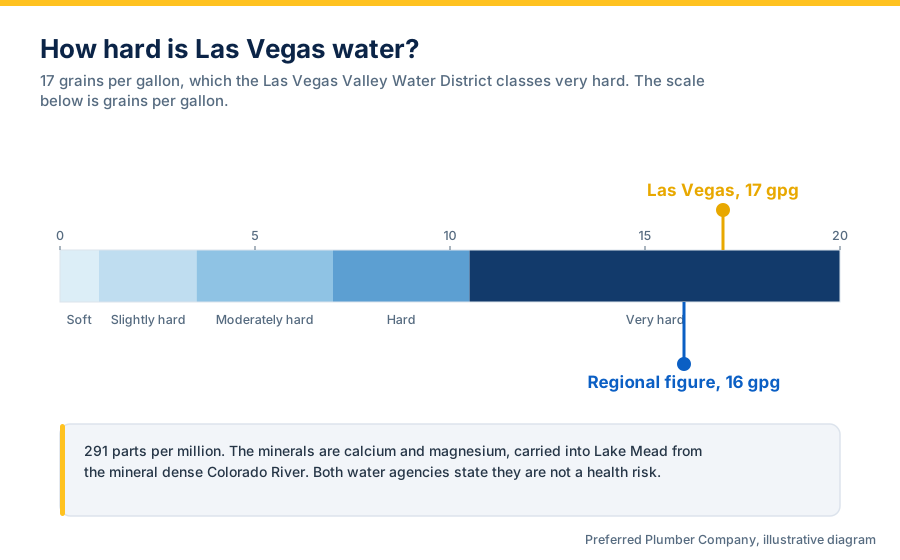
Scale and sediment are what shorten water heater life in this valley. At 291 parts per million the deposits build faster than the service life on a generic warranty assumes, and the rumbling sound a valley heater makes is the audible version of the problem.
What is actually happening inside the tank
Heating hard water drives calcium and magnesium out of solution. The deposits settle on the bottom of the tank and on the heating surfaces, and they accumulate, because nothing removes them on its own.
That layer does three things. It insulates the water from the heat source, so the burner or element runs longer to reach the same temperature. It takes up volume, so the tank holds less usable hot water than its rating suggests. And on a gas unit it traps water underneath, which then boils and forces its way out through the sediment. That is the rumbling, popping or knocking sound, and it is the single most recognisable symptom of a valley water heater.
The symptoms in the order they appear
The useful thing about this sequence is that the early symptoms are audible and harmless. A heater that has started rumbling is telling you to schedule maintenance, not that it is about to fail.
| Symptom | What it indicates |
|---|---|
| Rumbling or popping when it fires | Sediment layer on the tank bottom. Usually the first sign, and it appears long before a failure. |
| Hot water runs out sooner than it used to | Sediment occupying volume that used to hold water. |
| Longer recovery between showers | The insulating layer making heat transfer less efficient. |
| Water not as hot as it was, at the same setting | Same cause, further along. |
| Cloudy or gritty hot water | Sediment being carried out of the tank. |
| Rusty hot water | Possible anode rod exhaustion, meaning the tank lining is now the thing corroding. |
| Weeping or leaking from the tank body | The end. A tank body is not repairable and the unit needs replacing. |
What maintenance genuinely helps
Sediment management is the high value task, and manufacturers specify flushing in their own manuals. Follow the interval and method in the manual for your specific unit rather than a generic figure from a website, including this one: the interval varies by equipment and by water use, and your manual is the authority for your heater.
The anode rod is the other item worth asking about. It is a sacrificial component that corrodes so the tank lining does not, and when it is spent the tank becomes the thing being attacked. Checking it is a normal part of a service call on a mid life heater.
If your heater is in a garage, which most valley heaters are, keeping the area clear matters more than people think. Combustion air and access for service are both practical requirements.
Whether to soften the water
Softening removes the calcium and magnesium that form the scale, so it addresses the mechanism rather than the symptom. That is a real benefit and it is the honest way to describe it.
What we will not do is attach a number of extra years to it, because that number would depend on your usage, your maintenance and your equipment, and any figure would be invented. If you are replacing a heater anyway, and especially if you are moving to tankless, it is the natural moment to price softening alongside it.
For tankless specifically the calculation is stronger. Scale forms on a heat exchanger rather than in a tank bottom, descaling is the required maintenance, and softened incoming water reduces how hard that maintenance has to work.
When the answer is replacement
Water coming from the tank body itself, rather than from a fitting or a valve, means the tank has failed and cannot be repaired.
A repair cost that is a large share of a replacement on a unit already near the end of its life.
A unit that has had multiple repairs already.
Worth knowing before you plan the work: a replacement is permitted and inspected work in this valley, and a homeowner can pull the permit only for a primary residence they own. Rentals and second homes need a licensed contractor.
Sources for this guide
Every figure above comes from one of these, captured and checked on 17 September 2026. If a claim here has no source beside it, treat it as opinion.
Related services and guides
Ask us about your house
Reach Preferred Plumber Company
- Phone
- (725) 255-9011
- Licence
- Nevada State Contractors Board licence NV #0078989, C-1D Plumbing held by Preferred Plumbing LLC
- Service area
- Clark County, Nevada, including Las Vegas, Henderson, North Las Vegas, Summerlin, Paradise, Spring Valley, Enterprise, Sunrise Manor, Centennial Hills and Boulder City
We are a service area business. We come to you, so there is no counter to visit and no street address on this page. The number above is the fastest way in.
What to have ready
None of it is required. All of it makes the call shorter.
- Where you areThe address, and a cross street if the address is new or hard to find. Which end of the valley you are on decides who is closest.
- What is happening, in your own wordsNo plumbing vocabulary needed. "Water under the sink since this morning" is a better description than a guess at the cause.
- Whether water is running right nowThis is the question that changes everything else. If it is, say so first and we will talk you to the shutoff before anything else.
- What you have already triedPlunged it, reset the disposal, flipped the breaker, ran the softener through a regeneration. It saves repeating the steps that did not work.
- Whether you own or rentA landlord or an HOA sometimes has to authorise the work, and it is better to find that out on the phone than at the door.
Water pouring right now? Do not read the rest of this. Call (725) 255-9011 and shut off the supply while it rings.
Questions about this
Why does my water heater make a rumbling noise?
Sediment and scale on the bottom of the tank. Water gets trapped under the layer, boils, and forces its way out. In water at 291 parts per million that layer builds faster than in softer markets. It is an early warning rather than an emergency.
How often should I flush my water heater in Las Vegas?
Follow the interval in your unit manual, because it varies by equipment and by use. What is fair to say is that manuals are generally written for average conditions, and valley water is at the hard end of the range, so the more frequent end of any recommended interval is the sensible one here.
Does a water softener extend water heater life?
It removes the minerals that form scale, so it addresses the cause of the damage. We will not put a number of years on it, because that depends on your usage, maintenance and equipment, and any figure would be a guess about your house.
Is a rumbling water heater dangerous?
Not in itself. It is a sign of sediment rather than of imminent failure. What matters more is where any water is coming from: a fitting or valve is usually repairable, and the tank body is not.
Should I replace my water heater before it fails?
On an older unit that is rumbling and losing capacity, planning the replacement is usually cheaper than reacting to it, because a failed tank frequently arrives with water damage attached. It also means the work is permitted and inspected on your schedule.
Got a question this did not answer?
Describe what is happening at your property and you will get a straight answer about what it usually means.