
Guide, updated 2026-09-17
What pipe is in your walls, by the year it was built
Galvanised, copper, polybutylene and PEX. How to tell what you have from the build year, and which one is a problem waiting to happen. Sources linked.
- Sources linked at the foot of the page
- Written for Las Vegas and Clark County

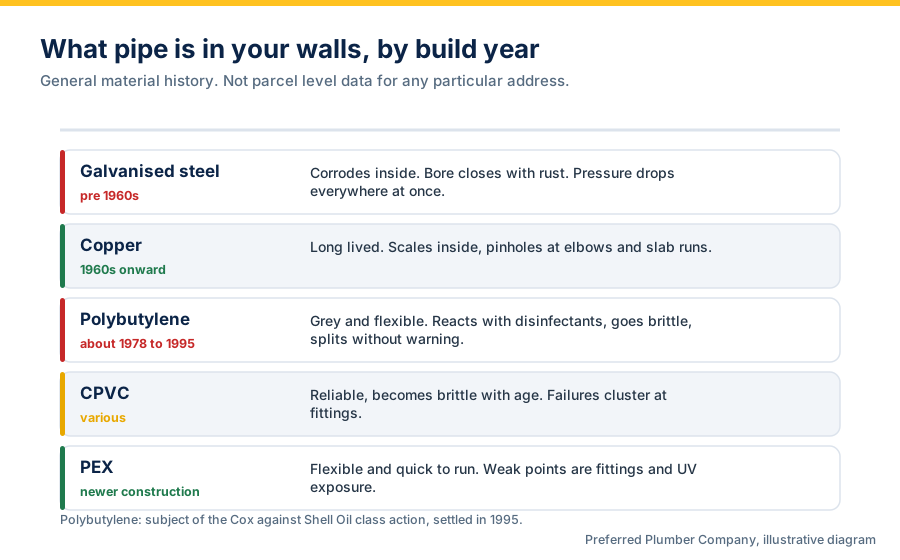
The build year tells you most of what is in your walls. Pre 1960s often means galvanised steel. The 1960s onward is largely copper. Roughly 1978 to 1995 is the polybutylene window, and that is the one worth identifying. Newer construction is generally PEX.
How to identify what you have, by looking
You do not need to open anything. Supply pipe is usually visible in three places: at the water heater connections, under a kitchen or bathroom sink, and somewhere in the garage.
Galvanised steel is dull silver grey, rigid, and has threaded joints. Copper is unmistakably copper, rigid, with soldered joints. Polybutylene is grey and flexible, usually with crimped metal bands at the fittings. CPVC is rigid plastic in cream or off white. PEX is flexible plastic tubing, commonly white, red or blue.
If what you find is grey and flexible, that is the one to pay attention to, and the rest of this guide explains why.
The eras and how each material fails
| Material and era | How it fails and what it means |
|---|---|
| Galvanised steel, pre 1960s | Corrodes from the inside until the bore closes with rust scale. Pressure falls across the whole house at once, and water runs rusty after the house sits unused. It fails along its length rather than at one point, so patching is a stopgap and repiping is usually the real answer. |
| Copper, 1960s onward | Long lived and generally good. In hard water it builds interior scale, and pinhole leaks develop at elbows and in slab runs where the pipe moves against concrete. A pattern of pinholes in one house is a reason to assess the whole run. |
| Polybutylene, roughly 1978 to 1995 | Grey and flexible. Chlorine and other oxidising disinfectants in municipal water react with the plastic. It goes brittle from the inside, flakes, then splits, frequently at a fitting and frequently with no warning drip first. Subject of the Cox against Shell Oil class action settled in 1995. No longer manufactured and no longer code rated. |
| CPVC | Rigid cream or off white plastic. Reliable but becomes brittle with age and is unforgiving of movement, so failures cluster at fittings. |
| PEX, newer construction | Flexible, freeze tolerant and quick to run, which is why repipes use it. Failure points are fittings and any section exposed to sunlight, because UV degrades it. |
| Cast iron drains, older property | Corrodes and scales internally, and eventually fails along the bottom of the pipe. Shows as recurring slow drains and smells rather than an obvious leak. Assessed by camera. |
Why polybutylene gets its own section
Because it is the one material on the list where the sensible plan is replacement rather than monitoring, and because the valley has a lot of construction from that window.
The mechanism matters. It is not wearing out mechanically; it is being chemically attacked by the disinfectants that make municipal water safe. That is why it fails without the slow drip that gives warning on other materials, and why a house can go from no problems to a split line inside a wall with nothing in between.
The practical position: if a house from roughly 1978 to 1995 still has grey flexible supply pipe, the question is not whether to replace it but when. Replacing before failure costs the repipe. Replacing after failure costs the repipe plus the water damage.
What this means when buying a house here
Ask the build year, then look at the visible supply pipe at the water heater and under a sink. It takes two minutes and it can change your view of the property.
Add a sewer camera inspection, because standard home inspections do not usually include one and the sewer lateral is the most expensive system a buyer can inherit unknowingly. On anything built before the mid 1990s we would treat it as necessary rather than optional.
If you find galvanised supply lines or polybutylene, that is not a reason to walk away. It is a number, and a number is something you can negotiate with.
When you collect repipe quotes, ask each contractor for their licence number. Nevada licenses plumbing as classification C-1, Plumbing and Heating, under the Nevada State Contractors Board, which requires the qualifying individual to show at least four full years of journeyman or supervisory experience within the fifteen years before applying. Checking the register takes a minute and it is the cheapest due diligence on a five figure job.
How hard water interacts with all of this
Valley water at 291 parts per million scales the inside of pipe over years, which narrows the bore and contributes to pinhole formation in copper.
In a house that already has partly closed galvanised pipe, scale and corrosion compound one another, so a pressure complaint can have two causes at once. Separating them is part of a proper diagnosis rather than an upsell.
Sources for this guide
Every figure above comes from one of these, captured and checked on 17 September 2026. If a claim here has no source beside it, treat it as opinion.
Related services and guides
Guides worth reading
Ask us about your house
Reach Preferred Plumber Company
- Phone
- (725) 255-9011
- Licence
- Nevada State Contractors Board licence NV #0078989, C-1D Plumbing held by Preferred Plumbing LLC
- Service area
- Clark County, Nevada, including Las Vegas, Henderson, North Las Vegas, Summerlin, Paradise, Spring Valley, Enterprise, Sunrise Manor, Centennial Hills and Boulder City
We are a service area business. We come to you, so there is no counter to visit and no street address on this page. The number above is the fastest way in.
What to have ready
None of it is required. All of it makes the call shorter.
- Where you areThe address, and a cross street if the address is new or hard to find. Which end of the valley you are on decides who is closest.
- What is happening, in your own wordsNo plumbing vocabulary needed. "Water under the sink since this morning" is a better description than a guess at the cause.
- Whether water is running right nowThis is the question that changes everything else. If it is, say so first and we will talk you to the shutoff before anything else.
- What you have already triedPlunged it, reset the disposal, flipped the breaker, ran the softener through a regeneration. It saves repeating the steps that did not work.
- Whether you own or rentA landlord or an HOA sometimes has to authorise the work, and it is better to find that out on the phone than at the door.
Water pouring right now? Do not read the rest of this. Call (725) 255-9011 and shut off the supply while it rings.
Questions about this
How do I know if my house has polybutylene pipe?
Look for grey flexible supply pipe, usually with crimped metal bands at the fittings, at the water heater connections, under a sink or in the garage. Construction from roughly 1978 to 1995 is the era to check. Grey and flexible is the identification; the build year is the reason to look.
Is polybutylene dangerous to health?
No. It is a reliability problem rather than a health one. The material becomes brittle through reaction with oxidising disinfectants in municipal water and then splits, often without warning.
Why does my whole house have low pressure?
In older property, corroded galvanised steel supply pipe closing up internally is a classic cause, usually alongside rusty water after the house sits. A failing pressure regulator is the other main candidate and is a much smaller job, so it gets checked first.
Is PEX better than copper?
Different rather than strictly better. PEX is flexible, freeze tolerant and faster to install, which is why repipes use it. Copper is rigid, long lived and costs more. PEX weaknesses are fittings and UV exposure, which are workmanship matters rather than material flaws.
Should I repipe before selling my house?
If it has polybutylene, it will almost certainly come up in the buyer inspection and be negotiated against you. Whether to fix it first or price it in is a financial decision, and getting a written scope first means you know the real number before you list.
Got a question this did not answer?
Describe what is happening at your property and you will get a straight answer about what it usually means.